The Chef Is Redesigning the Kitchen
Chef Ameer Natson spent more than a decade learning what makes kitchens work under pressure. Now, as he enters another potentially seven-figure year, he's turning that operational knowledge into a larger vision spanning kitchen design, luxury hospitality, private dining and his forthcoming cookbook, The Savory South.
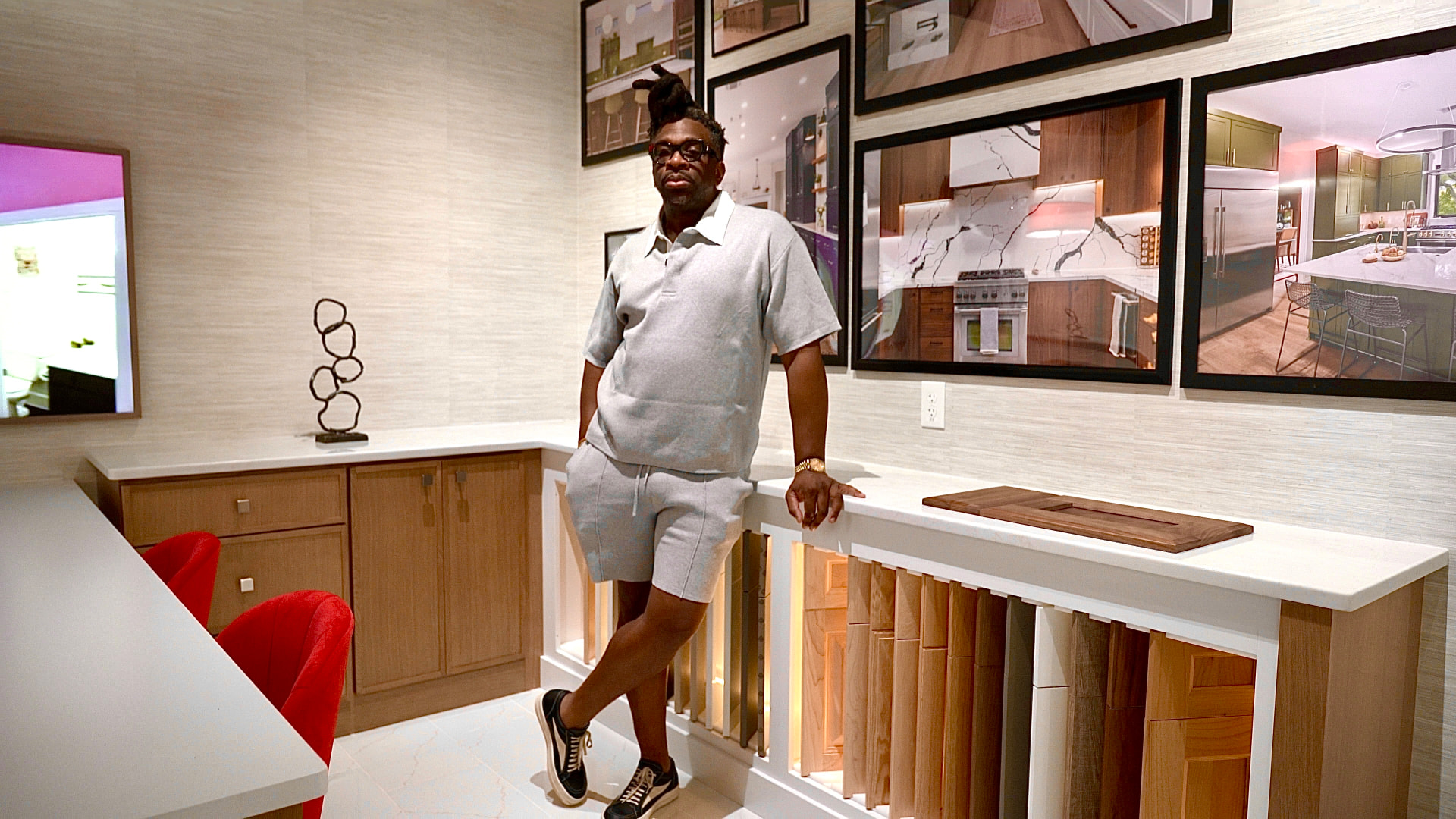
There are kitchens designed to be photographed.
And there are kitchens designed to work. Chef Ameer Natson has spent enough time inside both to know the difference.
After more than a decade building businesses around food, catering, private dining and hospitality, Natson has developed an unusually practical relationship with the kitchen. He doesn't just see cabinetry, countertops and appliances. He sees movement. He sees where the chef will prep. He sees the five unnecessary steps between the refrigerator and the cutting board.
He notices where groceries will land when someone walks through the door, where small appliances will disappear after breakfast, whether two people can cook without colliding and what happens when a kitchen designed for a family of four suddenly has twenty people gathered around the island.
That perspective is becoming the foundation for one of the more unexpected evolutions of his career.
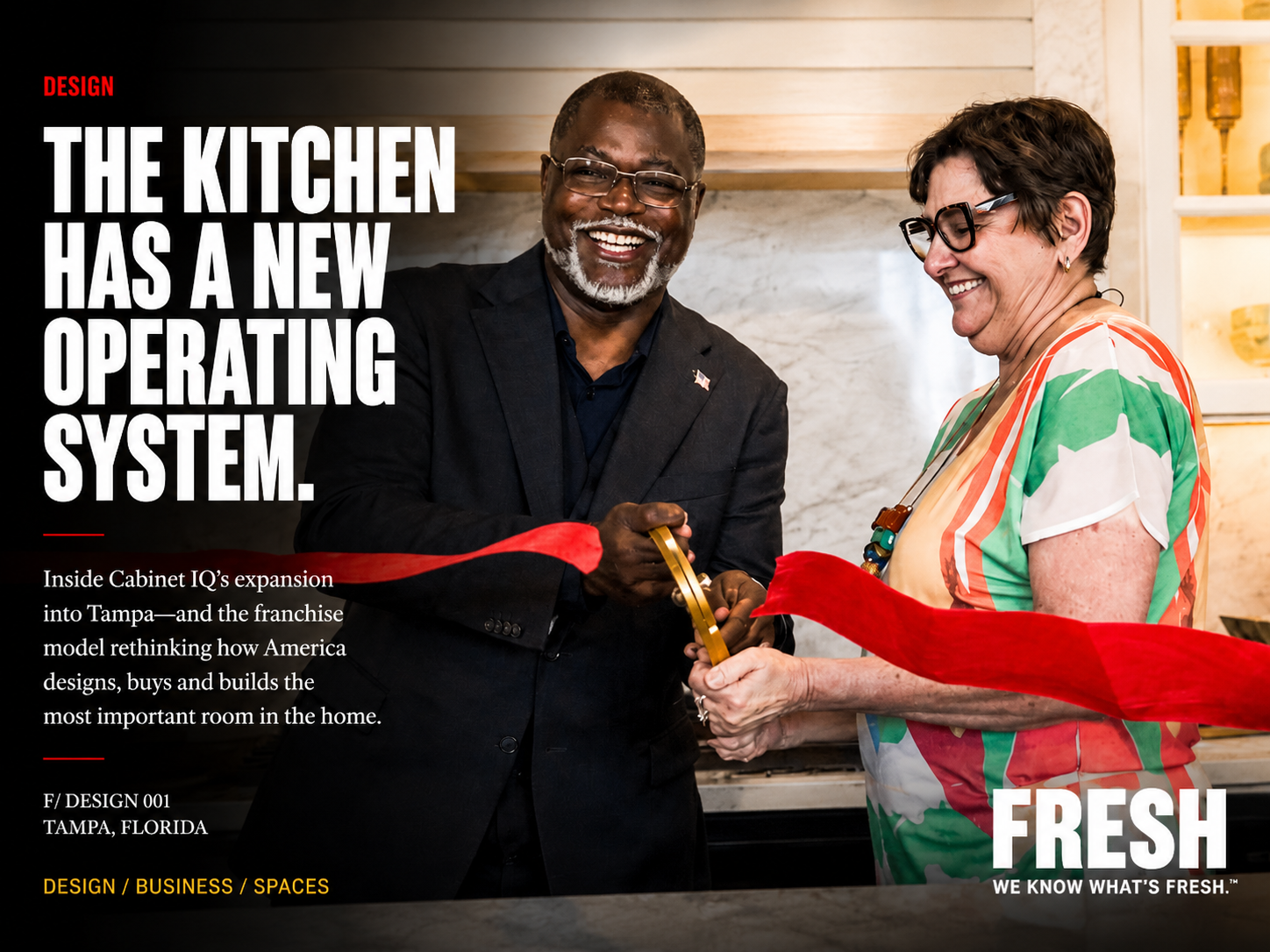
Through an expanding relationship with Cabinet IQ, Natson is taking lessons learned from commercial kitchens, catering operations and years of cooking inside private homes and applying them to residential kitchen design.
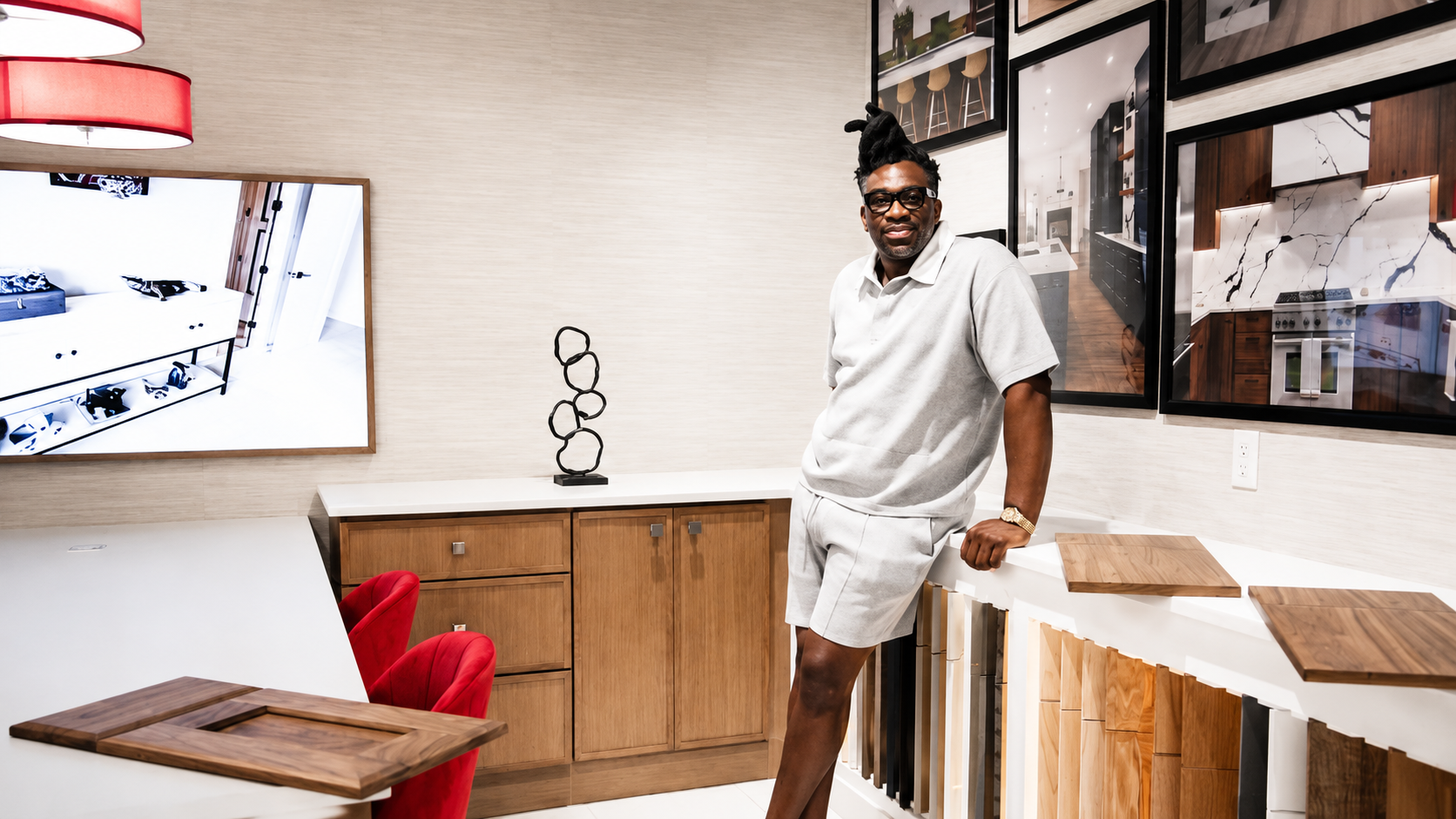
It sounds, initially, like an unusual pairing. It isn't. Because Natson isn't trying to become an interior designer. He's bringing something designers don't necessarily have: thousands of hours of understanding what happens after the kitchen is finished.
Beautiful isn'tenough anymore
The kitchen has changed. It is no longer simply the room where dinner gets made. It's the gathering place. The entertaining space. The morning meeting room. The place where children do homework while someone prepares dinner.
It's where the private chef works during the anniversary dinner and where twenty relatives somehow end up standing during Thanksgiving even though there's an entire house available.
Natson believes kitchen design has to catch up with how people actually live. For him, functionality begins before anyone selects a cabinet finish. The first questions should be different.
Who cooks here?
How do they cook?
How often do they entertain?
Do they hire chefs?
Where do they shop?
What equipment do they actually use?
What needs to be visible?
What should disappear?
How should this kitchen feel when people are actually living in it?
Those are questions Natson has spent years answering professionally without necessarily calling it design.
Commercial kitchens force operators to understand efficiency quickly. Poor placement costs time. Bad storage creates unnecessary movement. Inadequate prep space becomes a bottleneck. Improper workflow becomes obvious during service.
At home, those same mistakes may not cost hundreds of plates during dinner service. They cost something else: ease. And Natson thinks luxury should ultimately be about making life easier.
That philosophy is at the center of what Natson believes he can bring to Cabinet IQ. Not a chef's name attached to cabinetry. A chef's intelligence embedded into how kitchens are conceived.
The businessbehind the chef
Kitchen design, however, is only one piece of a much larger restructuring happening around Natson. Behind the scenes, he is consolidating years of culinary businesses into a more intentional hospitality platform.
Fresh Chef, his catering and food-production operation, and Dine Maison, the intimate in-home personal-chef experience, are being brought together as part of the re-emergence of Blue Ocean Hospitality.
For Natson, the move is less about changing names and more about finally organizing businesses that have naturally been moving toward one another. Fresh Chef understands production and scale. Dine Maison understands intimacy. One can execute for hundreds. The other understands what happens around a table for eight. Blue Ocean Hospitality is designed to understand both.
Chef Ameer Natson
Blue Ocean Hospitality
- Fresh Chef
- Dine Maison
- ELEV8 Hospitality
- Cabinet IQ × Ameer Natson
- The Savory South
“I've realized that I don't want to just own companies that sell food. I want to build a hospitality company that understands the entire experience — from what you're eating, to where you're eating it, to how you're being served, to how the room makes you feel.”
That distinction matters. Because Natson's next phase appears increasingly less centered around being hired simply to cook. He wants to build the infrastructure surrounding hospitality itself.
Elevatingthe experience
That ambition is also informing ELEV8 Hospitality, a new luxury hospitality brand currently being developed within Natson's expanding ecosystem. ELEV8 pushes the conversation beyond catering.
The premise is straightforward: people don't remember hospitality as a collection of individual transactions. They remember how an experience made them feel.
The arrival. The smell of the room. The lighting. The table. The service. The food. The details nobody notices until they're missing.
Natson has spent years orchestrating those details through events and private dining. Now he wants to turn that knowledge into a hospitality platform.
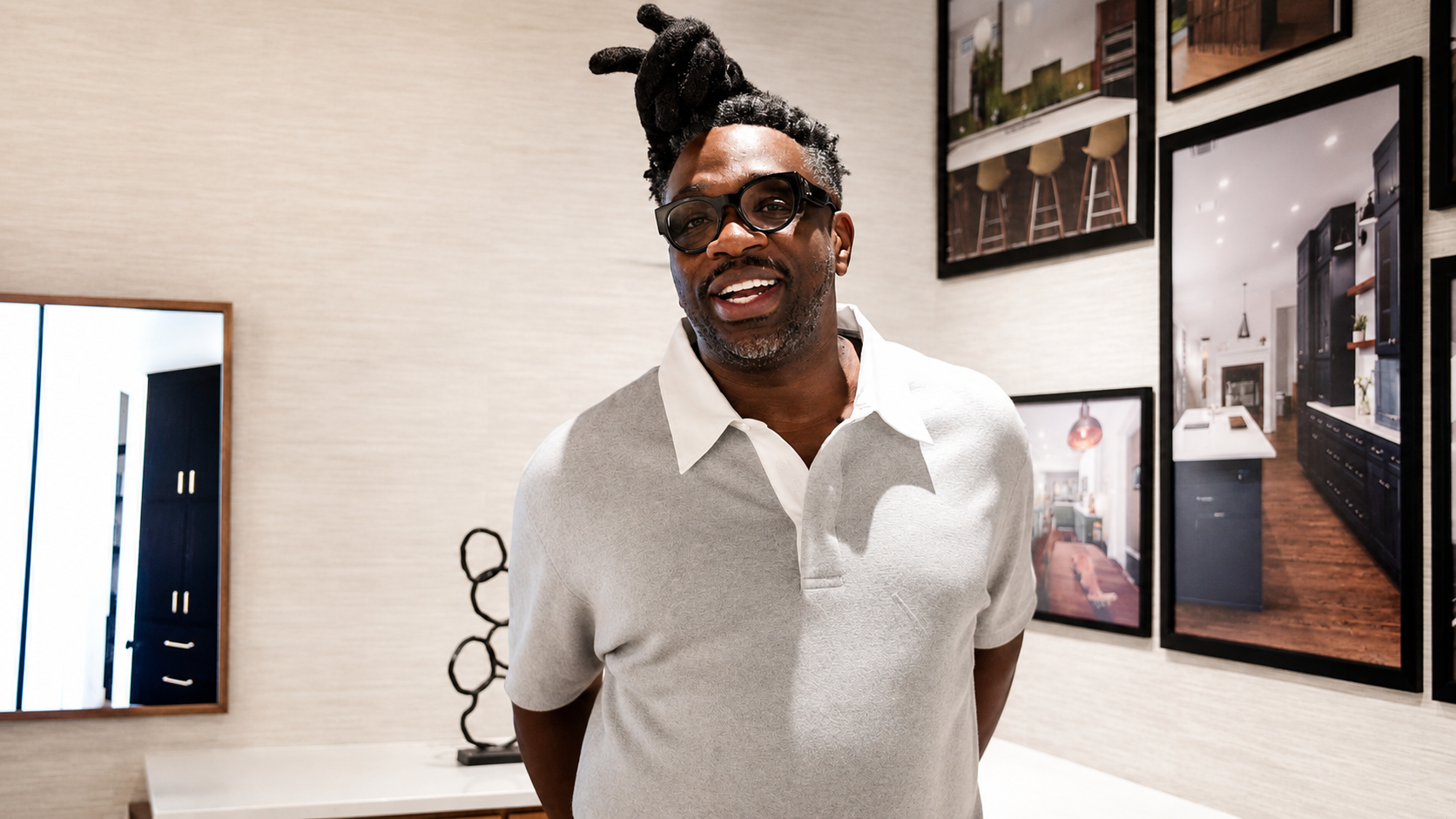
It's another example of what is becoming a recognizable pattern in his career: experience something operationally, understand the problem, then build around it.
That pattern started long before partnerships, hospitality brands and seven-figure ambitions. It started with a grill.
The grill thatstarted everything
In 2013, Natson's world looked considerably different. There was no elaborate portfolio of hospitality brands. There was a small grill and juice bar in New Jersey. And an entrepreneur trying to figure out what customers needed.
What started as a small food operation began evolving when Natson recognized demand for prepared meals. The grill became meal prep. Meal prep created repeat customers. Repeat customers created relationships. Those relationships generated requests for catering. Catering led to larger events. Events led into private dining. Private dining brought Natson inside people's homes. And every step exposed another opportunity.
Natson never stopped long enough to decide that the previous version of the business had to remain the final version. That may be the defining characteristic of his entrepreneurial career. He kept evolving.
“I wasn't sitting there in 2013 saying, ‘I'm going to build a hospitality company.’ I was trying to make great food, take care of people and create an opportunity. But every time the business showed me something, I paid attention.”
More than a decade later, the lesson remains central to how he operates. Listen to what the opportunity is trying to become.
The SavorySouth
Food, however, remains the thread running through everything. Natson is also preparing his forthcoming cookbook, The Savory South — a project intended to explore Southern food through his own culinary perspective.
For a chef increasingly talking about business, design and hospitality, the cookbook is an important reminder of where the entire ecosystem begins. Flavor. Memory. Technique. Family. Culture. The table.
The Savory South isn't positioned simply as a collection of recipes. For Natson, it represents another form of intellectual property — taking years of culinary experience and translating them into something capable of living beyond a single dinner service.
“Everything I'm building still starts with food. That's never changing. The difference is that now I understand food can be the beginning of the conversation instead of the end of it.”
And that sentence may explain Natson's strategy better than any organizational chart could.
Another seven-figure year —but a different kind of growth
With Fresh Chef and Dine Maison moving beneath the Blue Ocean Hospitality umbrella, ELEV8 Hospitality taking shape, The Savory South approaching, and strategic relationships like Cabinet IQ opening entirely new categories, Natson believes the businesses are moving toward another seven-figure year.
But he appears increasingly interested in a different question: what kind of company is being built with that revenue?
There's a difference between generating seven figures through constant execution and creating an enterprise with brands, systems, partnerships and intellectual property capable of generating value independently. Natson wants the latter.
The transition is subtle but significant. He is moving from operator toward architect. Not abandoning execution. Designing what comes after it.
Behindthecurtain
You started with a small grill and juice bar in New Jersey and transitioned into meal prep in 2013. When you look at everything happening now, what did that little business teach you?
It taught me everything.
When you have a small operation, there's nowhere to hide. You know when the food isn't right. You know when the numbers aren't right. You know when a customer isn't happy. You know when you bought too much inventory because you're looking at it sitting in the refrigerator.
I didn't have layers of people between me and the problem. I was the person solving it.
What changed everything was realizing that I wasn't necessarily in the restaurant business. People were coming to me because they needed food to fit into their lives.
Meal prep became a solution.
Then somebody needed catering.
Somebody else wanted a chef in their home.
Then there was a wedding. Then a corporate event.
I kept asking, “What does the customer need next?”
That's still how I think today.
The businesses are bigger, but the question hasn't changed.
After working in commercial kitchens and hundreds of hospitality environments, what do you see when you enter a residential kitchen that most people don't?
I see the problems almost immediately.
[Laughs.]
And I don't mean that disrespectfully. I can walk into an absolutely beautiful kitchen and immediately start thinking, Why is that there?
I'm thinking about movement.
If I'm standing at this island prepping, where's my trash?
Where's my refrigeration?
Where are my spices?
Where do I put the hot pan when it comes off the stove?
If I'm cooking and somebody opens the dishwasher, did they just block my entire workspace?
Now imagine you're entertaining and there are fifteen people in the kitchen.
That's what years in commercial kitchens teach you. Every step matters.
But I'm not interested in making someone's home look like a restaurant kitchen.
I want to take the intelligence of a commercial kitchen and hide it inside a beautiful residential kitchen.
That's completely different.
The homeowner should experience the efficiency without having to see the machinery behind it.
That's luxury to me.
So what does the kitchen of the future look like?
Less about gadgets and more about intelligence.
Technology will absolutely be part of it, but I think people hear “future kitchen” and immediately imagine screens everywhere.
That's not what excites me.
I want a kitchen that understands how you live.
Maybe you're a family that meal preps every Sunday.
Maybe you entertain twice a month.
Maybe you have a private chef three nights a week.
Maybe you don't cook at all, but your kitchen is still the center of your home.
Those are four completely different kitchens.
Why would we design them the same way?
That's what excites me about the opportunity with Cabinet IQ.
Before we design the kitchen, let's understand the life that's going to happen inside of it.
Then let's make it beautiful.
Blue Ocean Hospitality. Fresh Chef. Dine Maison. ELEV8. Cabinet IQ. The Savory South. It sounds like you're building in several directions simultaneously. What's actually happening behind the curtain?
I'm doing the opposite.
I'm narrowing everything.
From the outside it probably looks like, “Ameer has another company. Ameer has another idea.”
But internally, everything is becoming one thing.
Hospitality.
Fresh Chef taught us scale.
Dine Maison taught us intimacy and luxury inside people's homes.
Blue Ocean is the platform that can bring those capabilities together.
ELEV8 allows us to think even bigger about luxury hospitality and experiences.
Cabinet IQ allows me to bring years of culinary operations into the environment where hospitality begins.
And The Savory South brings people back to the food and the story behind me as a chef.
They're not six random ideas.
They're six doors into the same house.
That's the part people haven't seen yet.
You built the first version one meal at a time. What does winning look like now?
Ownership.
That's probably the biggest difference.
When I was younger, success was about getting the next event, hitting the next revenue number, getting the next opportunity.
Those things still matter.
But I'm thinking differently now.
I want to own the brands.
Own the intellectual property.
Own the systems.
Build partnerships where we're creating something, not just being paid to show up.
Create opportunities for other people.
Build companies that don't collapse if Ameer isn't physically standing in the kitchen.
And I want my children and my family to be able to look at what was built and understand that it started from something very small.
I don't want the story to be, “He became a successful chef.”
I want the story to be:
He understood what being a chef taught him — and turned that knowledge into something much bigger.
If we do that, we won.
The kitchen wasalways the beginning
Maybe that's what makes the Cabinet IQ relationship worth watching. On paper, cabinetry and culinary entrepreneurship occupy different industries. In practice, they're separated by only a few feet.
One company thinks about how the kitchen gets built. The other has spent years discovering what happens once somebody starts using it. And Natson now finds himself standing directly between those two worlds.
Thirteen years after turning a small New Jersey grill and juice bar into a meal-prep operation, the entrepreneur is again looking at something familiar and asking whether it could become something bigger.
Except this time, the opportunity isn't simply what's being cooked. It's the room around it.
Because after years of feeding people, Natson has arrived at a deceptively simple idea: great hospitality doesn't begin when the plate reaches the table. It begins much earlier. With movement. With intention. With design. With understanding how people actually live.
The chef isn'tleaving the kitchen.He's finallyredesigning it.
FRESH MEDIA™ — Business / Design / Hospitality. People, places + ideas shaping what's next.