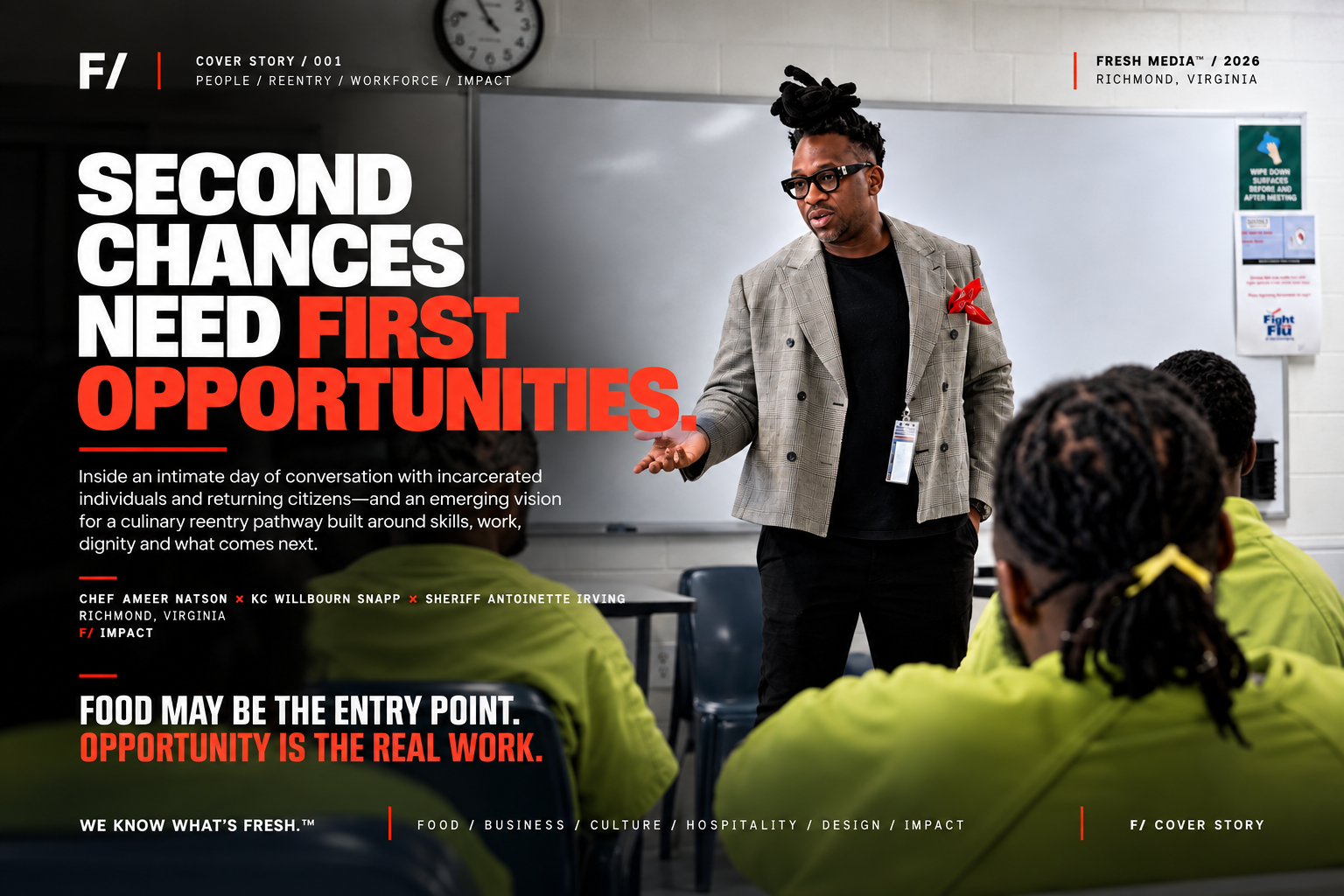
Second Chances Need First Opportunities.
Chef Ameer Natson, KC Willbourn Snapp, and Richmond Sheriff Antionette V. Irving are telling a different story about reentry—one that begins not with a sentence, but with a conversation. It starts by listening, comes alive in the kitchen, and leads to one clear question: What becomes possible when a person is given more than a second chance—when training opens the door to real work, real employers, and the opportunity to build a future with purpose?
BEFORE THE SECOND CHANCE, SOMEBODY HAS TO OPEN THE FIRST DOOR.
A particular stillness hangs in a correctional facility—one that is hard to understand until you are standing inside it.
The doors feel heavier. Movement becomes more deliberate. Even time seems accounted for.
But inside a classroom in Richmond, Virginia, the most important thing happening that day had little to do with confinement. It was a conversation about what comes after it.
Chef Ameer Natson stood at the front of the room in a gray plaid jacket, black shirt, and red pocket square. In front of him sat men and women preparing to navigate one of the hardest transitions a person can make: returning to a world that says it believes in second chances, yet too often hesitates to give the first opportunity that makes one possible.
There was no cooking demonstration. No celebrity entrance. No carefully rehearsed speech about overcoming adversity. Instead, the work began with something far less polished—and far more important. Listening.
Natson, alongside KC Willbourn Snapp and Richmond Sheriff Antionette V. Irving, spent the day engaging directly with incarcerated individuals and returning citizens, asking questions that reached far beyond the kitchen.
What happens when you go home?
Who will hire you?
What does an employer see when they see your record?
What skills can become income?
What happens when someone is willing to give you an opportunity—but you have never been given the chance to prove you are ready for it?
And what does stability actually look like after incarceration?
Then came the question beneath all the others:
What has to exist between release and employment for a person to have a genuine chance at rebuilding a life?
That question starts to shape something much larger than a visit. It is shaping a vision for a culinary reentry pathway built around training, verified skills, hospitality, employment, entrepreneurship, mentorship—and, at the center of it all, dignity.
Because food may be the entry point. The kitchen may be where the work begins. But opportunity is the real work. And sometimes, changing what comes next begins with simply being willing to listen.
WHEN YOU SIT DOWN, THE STORY CHANGES
Reentry is easy to discuss from the outside. It becomes something entirely different when the people living it are sitting across from you.
Programs can be designed around curriculum maps, funding cycles, enrollment targets, attendance requirements, and graduation dates. But none of those measures answers the fundamental question that ultimately determines whether a workforce initiative truly matters: Will this actually help someone build a life?
That question cannot be answered from a boardroom alone. It requires listening. It requires understanding that employment after incarceration is rarely just about whether a job exists.
The path to sustainable employment can also be shaped by transportation, housing, family reunification, documentation, technology, financial pressure, workplace expectations, confidence, gaps in employment history, and the stigma attached to a record that can enter the room before the person does.
Employers have legitimate questions, too. Is this person prepared? Can they arrive on time? Can they function as part of a team? Can they communicate under pressure? Can they follow systems and meet expectations? Can they demonstrate the skills they claim to have? And, perhaps most importantly, can someone credible verify what they know how to do?
A serious reentry model has to respect both sides of that equation. That is part of what made the Richmond conversation meaningful. Rather than beginning with a predetermined solution—Here is the program we are bringing you—the emerging philosophy begins somewhere far more useful: Tell us what the pathway actually needs to solve.
There is a profound difference between designing something for people and designing something with a genuine understanding of their lives. That difference may ultimately determine whether a program simply produces certificates—or produces outcomes.
The goal is not to create another program people complete. The goal is to create a pathway that gives people a real chance to move forward.
THE KITCHEN CAN BE A FIRST DOOR.
Chef Ameer Natson has spent years looking at kitchens differently.
Yes, a kitchen is where food is made. But it is also a classroom for work, responsibility, and opportunity.
You learn to show up. Prepare. Communicate. Follow standards. Accept correction. Work under pressure. Solve problems. And, over time, earn trust. That progression is central to the philosophy Chef Ameer has been building through Fresh Chef Foundation and its F/ IMPACT work.
Food is not the finish line. It is the access point—a first skill, a first paycheck, a first professional reference, a first leadership opportunity, or even a first business idea. That makes culinary work particularly relevant to reentry. Skills can be demonstrated. Progress can be seen. Growth can be documented. And responsibility can grow as trust is earned.
Reentry is not only about leaving incarceration behind. It is about gaining access to meaningful economic opportunity.
A culinary pathway cannot solve every barrier. But it can build a bridge. And sometimes, one bridge is enough to help someone see what comes next.
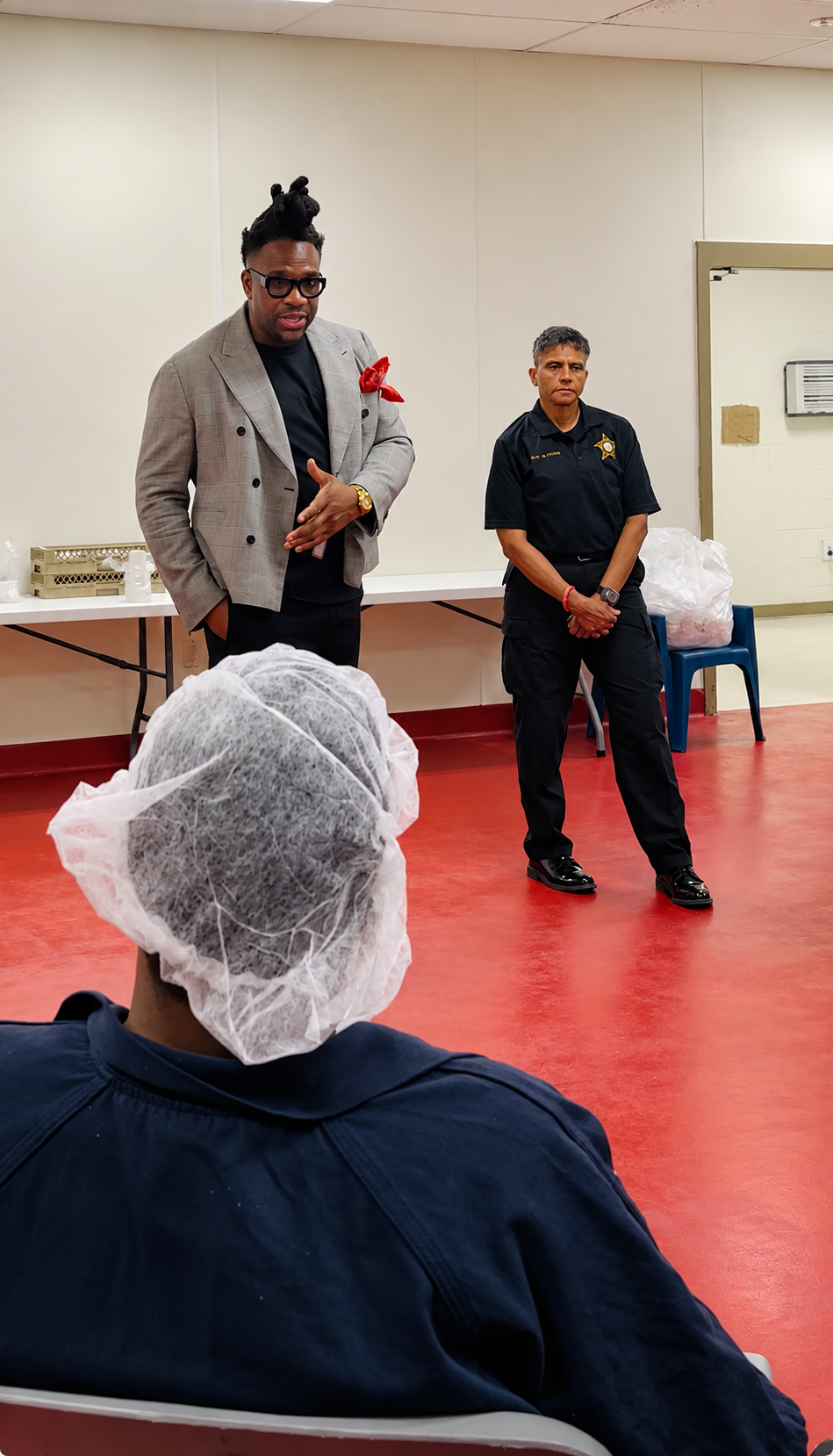
Inside the culinary production kitchen at the Richmond City Sheriff's facility, the conversation about opportunity was unfolding alongside the work itself. Chef Ameer stood with Sheriff Antionette V. Irving, speaking with the individuals who prepare food in the facility's working kitchen.
This was not a conversation confined to a classroom or conference room. It was happening in the production kitchen, amid the routines and responsibilities of the job. For a story about turning culinary skills into a pathway to opportunity, the setting was significant.
The individuals doing the work were not simply part of the backdrop; their experiences offer an important perspective on what comes next—and on what a meaningful pathway from culinary training to employment and opportunity should look like.
YOU CANNOT BUILD FOR PEOPLE YOU NEVER LISTEN TO.
This is where KC Willbourn Snapp becomes important to the story.
Workforce programs are built on more than policy or good intentions. They depend on relationships, trust, credibility, and people who can connect worlds that do not always speak the same language—community, government, business, workforce systems, employers, and people with lived experience.
That is the work of a connector: opening doors, building trust, and creating the conditions for meaningful collaboration.
The Richmond visit demonstrated the power of that role. Its significance was not simply that a chef entered a correctional environment, but that people who might otherwise be reduced to statistics or policy language had the opportunity to sit together, listen, and share their experiences.
Proximity changed the conversation. When people see one another beyond labels, they can start building solutions together.
WHAT IF PUBLIC SAFETY ALSO MEANS PREPARING PEOPLE TO SUCCEED?
Sheriff Antionette V. Irving is central to that room for another reason.
Leadership in a correctional environment rests on safety, accountability, security, and order. But reentry raises a larger question: What if preparation for life beyond incarceration begins long before release?
Instead of leaving with paperwork and hope, what if people leave with something tangible—a food-safety credential, kitchen experience, professional references, a résumé, interview preparation, a portfolio, an employer connection, or a mentor?
That is a different model of reentry.
Not simply release and hope, but preparation and transition.
It does not remove personal responsibility or eliminate standards. It gives people a legitimate opportunity to meet them.
THEY ARE NOT A PROGRAM CATEGORY.
Institutional language can make people disappear. Words like inmate, offender, returning citizen, and even participant can become substitutes for the person behind the label. But proximity changes that.
There are parents and workers. People with skills and people learning new ones. People looking for a job, building a business, preparing to return to their families, or wondering how to explain a gap in their résumé.
There are also mistakes. Accountability matters. But accountability and opportunity are not opposites. A person can be responsible for the past and still have the opportunity to build a different future.
That distinction is at the heart of second-chance work. Because a second chance means little without a real opportunity to move forward. A second chance requires somewhere to go.
NOT JUST A CLASS. A PATHWAY.
What began as a conversation in Richmond could become something more deliberate: a culinary reentry pathway.
The key word is pathway.
Not simply a class or a certificate, but a progression from preparation to employment and, ultimately, leadership and ownership.
It begins with readiness—professional expectations, communication, kitchen conduct, food safety, and sanitation. From there, participants build culinary skills and learn the realities of professional operations, including production, inventory, teamwork, and service.
But training is only part of the equation.
A meaningful pathway must also answer the question: What happens next?
That means résumés, references, interview preparation, employer connections, financial readiness, entrepreneurship, job placement, and follow-up.
The framework is straightforward:
LEARN → COOK → WORK → LEAD → OWN
The goal is not to graduate people from a program. It is to build a bridge to what comes next.
TRAINING MEANS VERY LITTLE WITHOUT SOMEWHERE TO GO.
The hospitality industry has talked about its labor shortage for years. Restaurants, hotels, caterers, hospitals, schools, and institutional kitchens all face challenges finding reliable workers, experienced cooks, and strong supervisors.
At the same time, there are people eager to work who struggle to find employers willing to look beyond their past and consider what they can contribute next.
That contradiction deserves attention.
If hospitality needs talent, it also has a role in developing it.
A meaningful culinary reentry initiative would need more than instructors. It would need employers—restaurants, hotels, caterers, hospitals, schools, food-service companies, and hospitality businesses willing to create real opportunities.
Second Chance Employer Network™ — businesses committed to interviewing, mentoring, providing work experiences, and hiring candidates whose skills and readiness have been demonstrated.
The principle is simple:
Opportunity without standards is unsustainable. But standards without access are not opportunity.
A credible workforce model needs both.
PROVE WHAT YOU CAN DO.
Imagine completing a workforce pathway and walking into an interview with more than a certificate.
You bring a Return Ready Career Portfolio™ — a résumé, food-safety credentials, attendance record, demonstrated competencies, references, work samples, a capstone, career goals, and a transition plan.
Eventually, that could become a digital skill passport documenting not only what someone completed, but what qualified instructors actually observed them doing.
The philosophy is simple:
Don't just tell an employer someone completed a program. Show them what that person can do.
That shift—from participation to evidence—makes training more meaningful for employers and participants alike.
Progress becomes visible. Skills are documented. Readiness has evidence behind it.
For someone rebuilding a professional identity, that evidence can be powerful:
You learned this. You demonstrated this. You are ready for what comes next.
THIS IS ALSO A WORKFORCE STORY.
It would be easy to place this initiative entirely in the category of philanthropy. That would miss the larger opportunity.
Reentry is a human issue, but it is also an economic one.
Hospitality needs workers. Communities need pathways to employment. Employers need better ways to identify prepared talent. Entrepreneurs need opportunities to build businesses. Returning citizens need employers willing to evaluate readiness—not simply history.
A well-designed culinary reentry model sits at the intersection of all of these needs. It is workforce development, economic development, talent development, entrepreneurship, and community investment.
And its impact should be measured accordingly. Not simply by how many people attend, but by what happens next:
Who earns credentials? Who gets hired? Who stays employed? Who advances? Who increases their income? Who starts a business? Who comes back to mentor someone else?
Those are harder outcomes to measure. They are also the ones that matter.
START LOCAL. BUILD SOMETHING REPLICABLE.
Richmond does not need to become the symbol of a national movement tomorrow. First, the work has to work.
That means focusing on the less glamorous essentials: program design, curriculum, partners, funding, facilities, instructors, participant selection, employer commitments, measurement, transition support, and follow-up.
Strong models rarely begin at scale. They begin with one cohort, one employer willing to say yes, one participant earning a first shift, a paycheck, a promotion—and a changed trajectory. Then another. And another.
If Richmond can build that well, replication becomes a conversation worth having. The day also connected Chef Ameer with Richmond's civic leadership when Sheriff Irving introduced him to Oddie Donald II, the city's Chief Administrative Officer. The photograph captures a personal introduction, not an announced agreement. Its significance is the connection itself: a conversation about opportunity extending beyond the facility and into the broader community.
The pathway is not built yet. But the question of who can help build it is no longer confined to one institution.
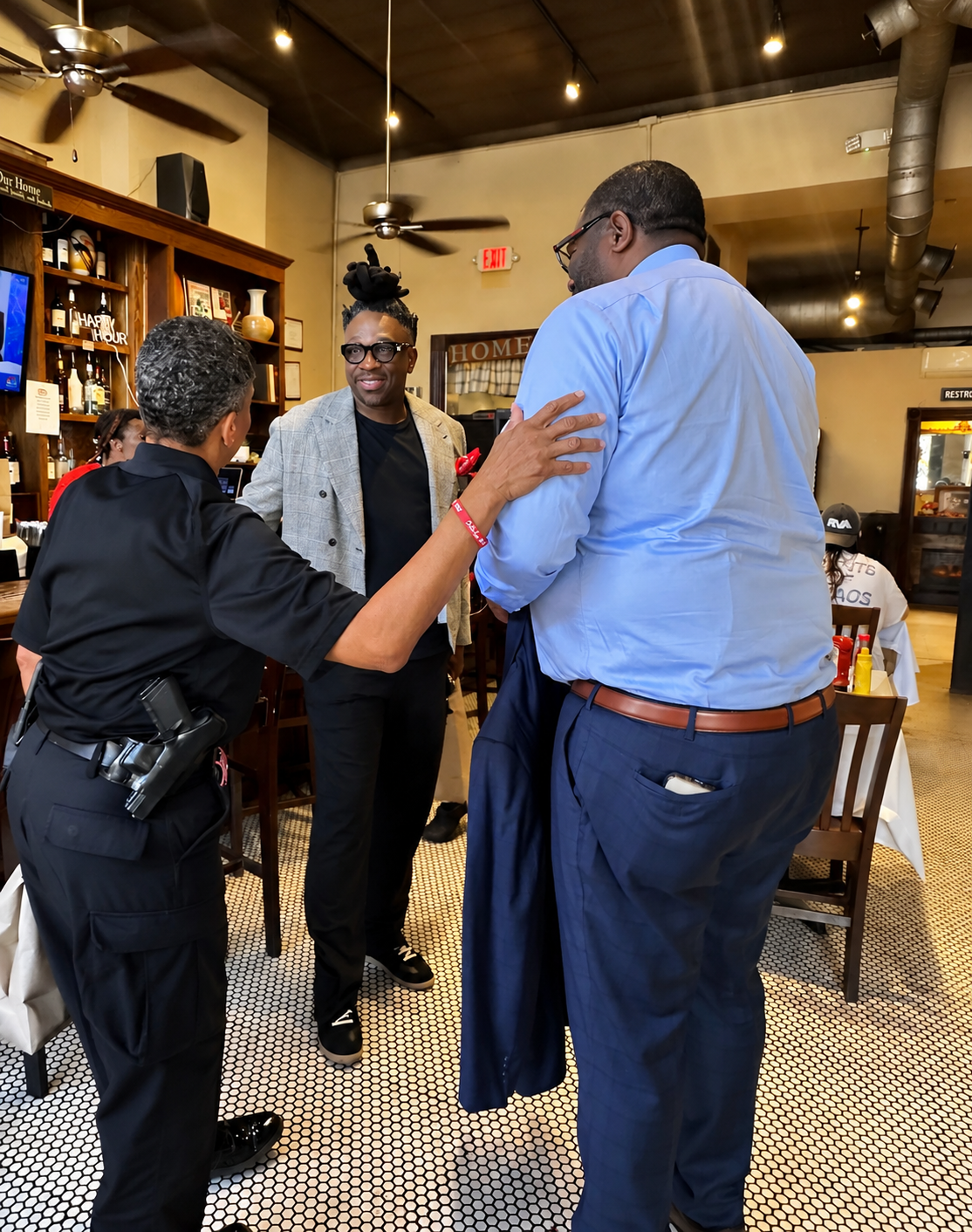
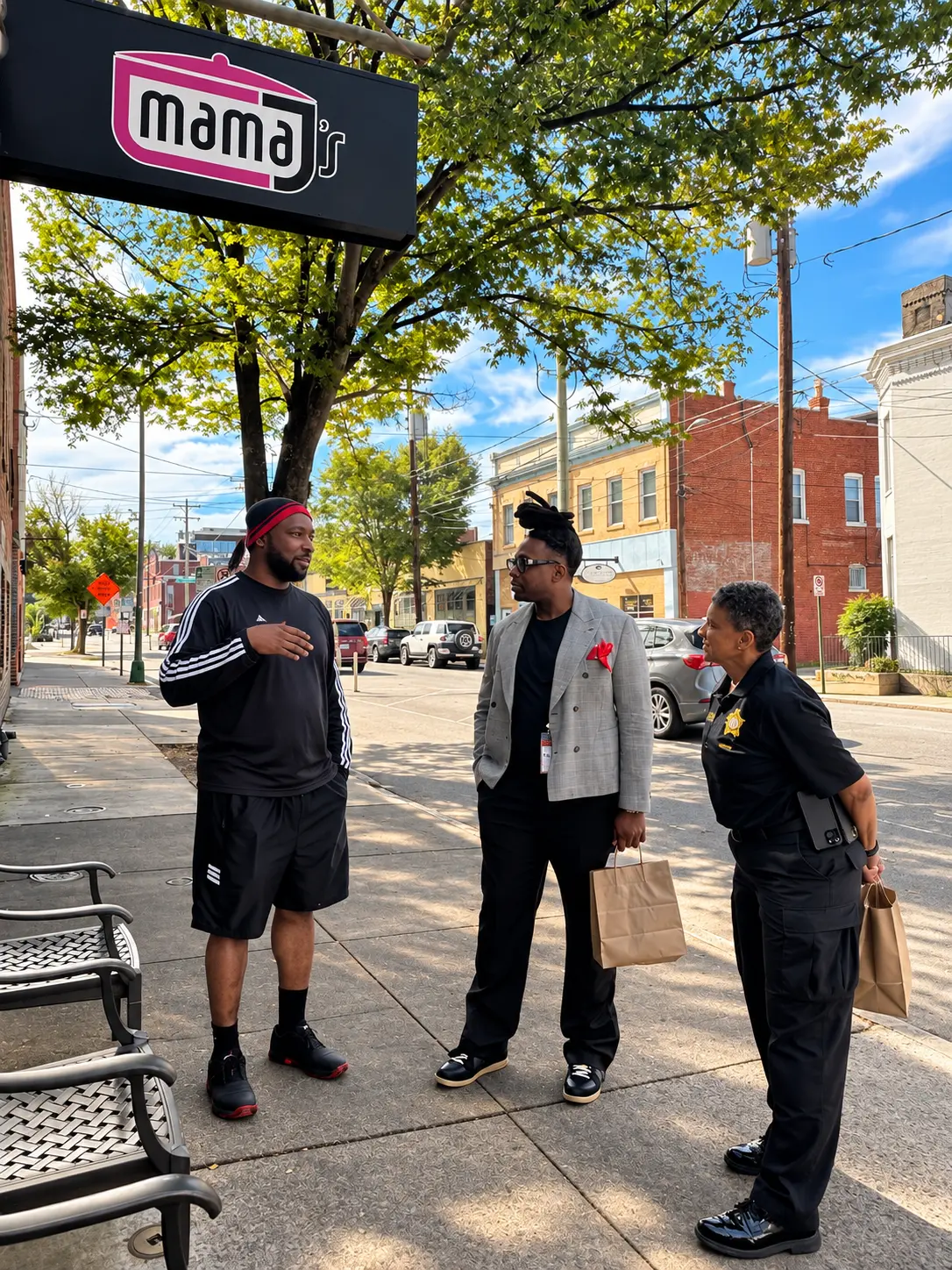
The visit also included lunch at Mama J's, where Chef Ameer and Sheriff Irving spent time with the restaurant's owner.
The stop brought the conversation beyond the facility and into the community. A restaurant is where preparation, service, teamwork, and ownership become real work.
It was not an announced hiring commitment or formal partnership. It was a reminder of where a culinary reentry pathway ultimately has to lead: into the community, where skills can become opportunity, and people can build a future.
THE DAY ENDS. THE QUESTION DOESN'T.
Every institutional visit eventually ends. Chairs move, the room empties, and the doors close. But Chef Ameer leaves Richmond with more than a program proposal. He leaves with questions: How does conversation become curriculum? How does training connect to employers? How do you make skills visible, opportunity concrete, and accountability compatible with dignity?
The answers will require curriculum, partners, funding, employer commitments, clear standards, and participants willing to do the work. The pathway still has to be built.
But something important already exists: a conversation, an opening, and people from different sides of an institution asking what they might build together.
Sometimes reentry begins with a door opening.
Sometimes it begins when someone decides a person's future deserves as much attention as their past.
And sometimes, it begins in a kitchen.