The Kitchen Has a New Operating System.
Inside Cabinet IQ's expansion into Tampa — and the franchise model attempting to rethink how America designs, buys and builds the most important room in the home.
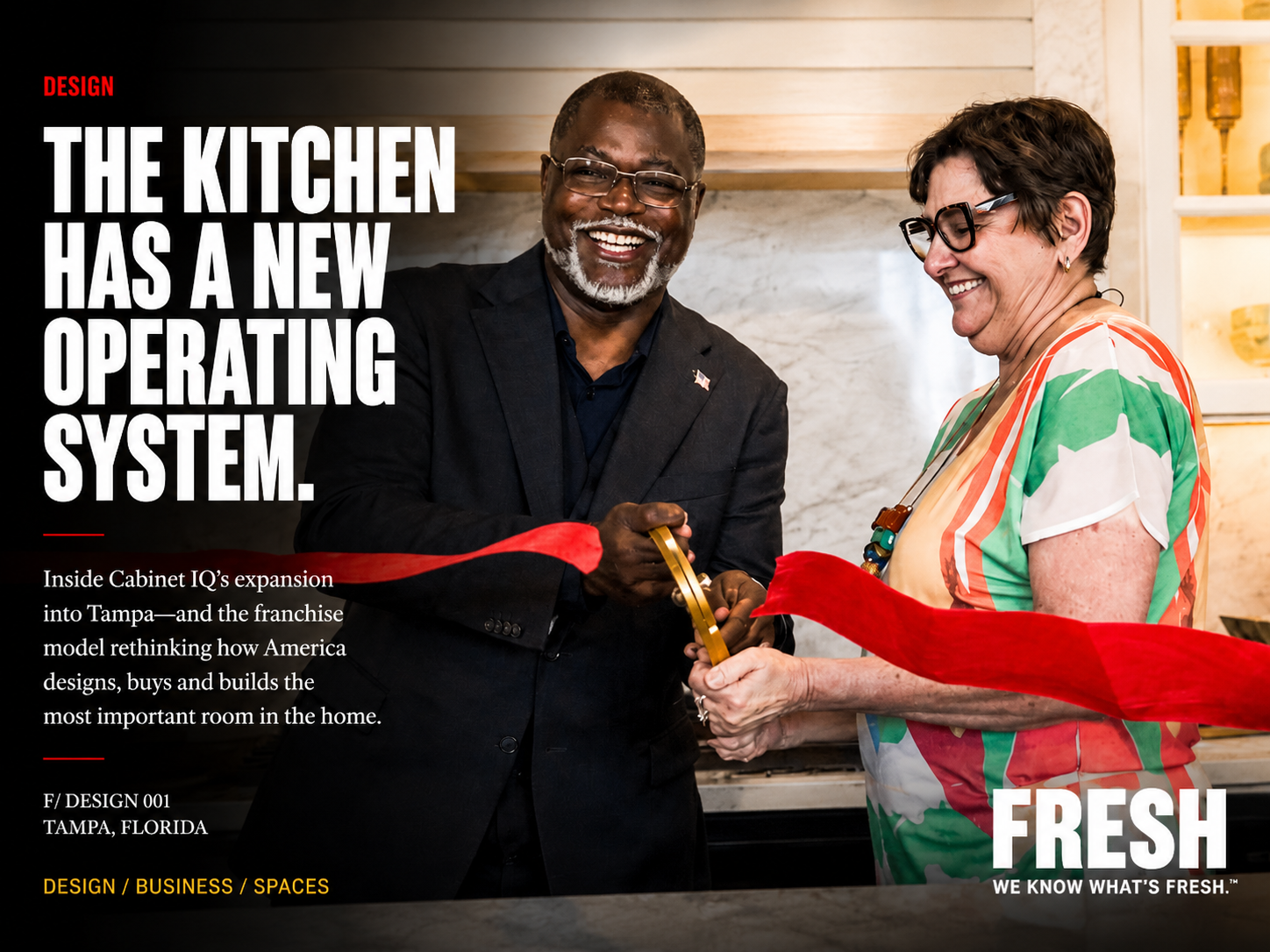
There is something wonderfully old-fashioned about cutting a ribbon. A pair of scissors. A room full of people. A bright strip of red stretched across a doorway. One clean cut separating what was being built from what is officially open.
But inside Cabinet IQ's new Tampa presence, the bigger story is decidedly more modern. This is a company betting that one of the most complicated, emotional and expensive spaces in the American home can be made considerably smarter. Not merely prettier. Smarter.
Cabinetry is a product. Remodeling is an experience.
Because while kitchens have undergone an extraordinary aesthetic evolution, the process of actually creating one can still feel surprisingly antiquated.
Homeowners enter a remodeling project imagining cabinetry, countertops, finishes and the dinner they will eventually serve. Then reality arrives. Measurements. Vendors. Design decisions. Lead times. Installers. Budgets. Change orders. Communication. And the seemingly endless number of decisions hiding between demolition and dinner.
Cabinet IQ saw an opportunity inside that friction. And Tampa is becoming part of what happens next.
From a remodeling problemto a business model.
Cabinet IQ's origin story begins with something far less glamorous than a showroom opening: frustration. The company says its beginnings trace back to a homeowner's difficult remodeling experience and a realization that the kitchen-and-bath industry had an experience problem.
The opportunity wasn't simply to sell better cabinets. It was to build a better process. Cabinet IQ was founded in 2016 around the idea that homeowners needed more clarity, communication and accountability from concept through installation.
That distinction matters. Cabinetry is a product. Remodeling is an experience. And the companies that understand the difference are increasingly changing the category.
Cabinet IQ began building systems around the journey rather than treating the showroom as the finish line. Today the company describes that journey through four stages: Discover. Design. Deployment. Deliver. The language sounds almost more technology company than traditional remodeling contractor. That may be the point.
Discover what the homeowner actually needs. Design around the home and the people living in it. Coordinate the deployment. Then deliver the finished environment. Behind the beautiful countertops and cabinetry is something much less Instagrammable but arguably more important: process.
Discover.
Design.
Deployment.
Deliver.
The kitchen isn'ta room anymore.
To understand why this matters, you have to understand what has happened to the kitchen. The kitchen used to be primarily where food was prepared.
Today it might simultaneously be a restaurant, an office, a homework station, a cocktail bar, a gathering space, a storage system, an entertaining environment — and the unofficial center of the house.
A restaurant.
An office.
A homework station.
A cocktail bar.
A gathering space.
A storage system.
The unofficial center of the house.
Open-plan living only accelerated the shift. The kitchen became architecture people actually interact with all day, which means beautiful is no longer enough. The distance between the refrigerator and prep space matters. Storage matters. Drawer placement matters. Lighting matters. Countertop depth matters. Traffic patterns matter. Where the trash lives matters. Where someone puts a grocery bag when they walk through the door matters.
Great kitchen design often reveals itself through the tiny frustrations that never happen. Cabinet IQ is building its proposition around precisely that intersection: design × function × process.
Why Tampamatters.
Tampa is more than another pin on a national expansion map. It is a particularly interesting laboratory for the modern kitchen.
Florida continues to attract homeowners bringing different architectural preferences, lifestyles and expectations into rapidly evolving residential markets. Indoor and outdoor entertaining intersect. Hospitality is embedded into the lifestyle. Homes need to function for everyday family life while being capable of becoming gathering places almost instantly. The kitchen sits directly in the middle of that behavior.
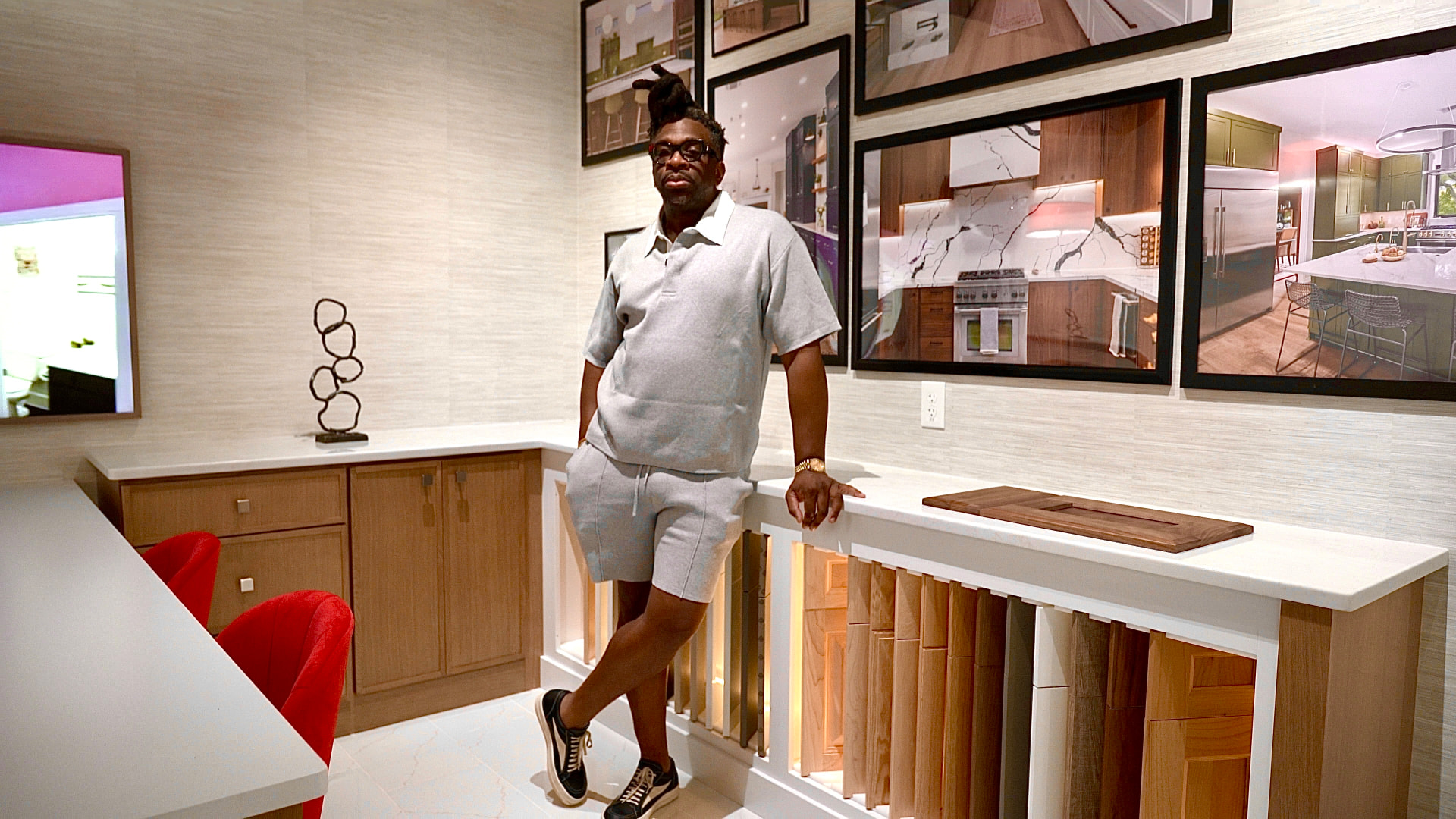
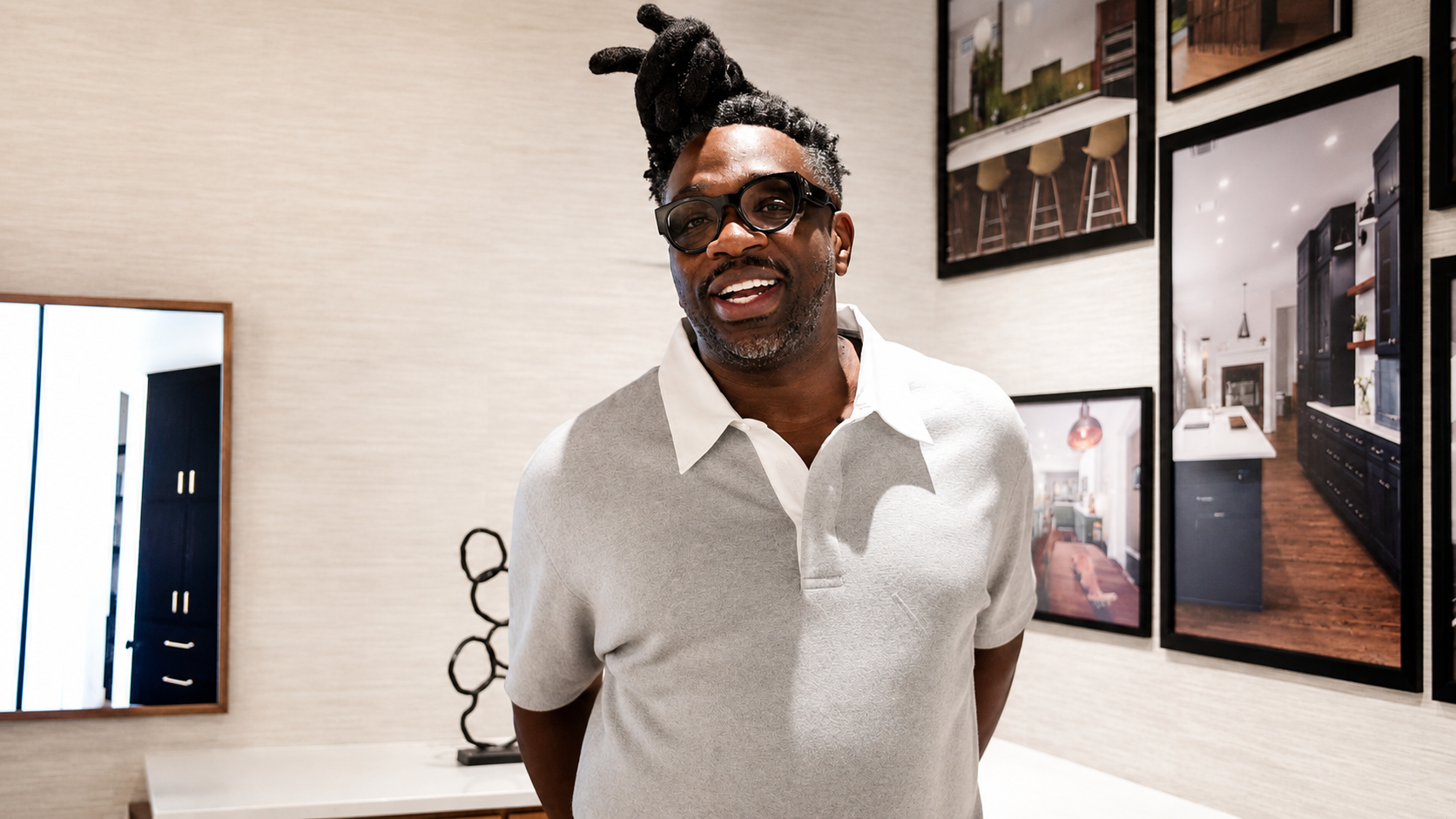
For Cabinet IQ, entering Tampa therefore represents something larger than opening another showroom. It creates another local expression of a national system. Customers can physically experience materials, cabinetry, countertops and design possibilities while working through a structured process intended to take them from idea to installation. That showroom becomes part design studio, part material library, part sales environment and part classroom. Because most homeowners are not kitchen designers. They shouldn't have to become one simply to renovate their house.

The real productmay be confidence.
Walk into almost any remodeling showroom and there is no shortage of choice. Wood. Stone. Quartz. Hardware. Colors. Profiles. Finishes. Choice isn't the problem. Too much choice can actually become the problem.
The more meaningful role of the modern kitchen designer is increasingly interpretation. What does this person actually need? How does this family actually live? What will still function five years from now? Where should the budget be concentrated? Which beautiful idea will become irritating after six months?
The best design businesses aren't simply showing customers what they can buy. They are helping customers understand what they should build. Cabinet IQ's model attempts to systematize that guidance, and that might be the company's most important product. Confidence.
Then they franchisedthe system.
This is where Cabinet IQ becomes a business story as much as a design story. Building one successful remodeling company is difficult. Replicating it across markets is an entirely different challenge. Cabinet IQ chose franchising. But the interesting part isn't putting the same logo over different showroom doors. The real challenge is replicating what happens behind those doors.
The company has built its franchise proposition around transferring systems for marketing, sales, operations, customer management, design and installation into locally operated businesses. Prospective franchisees move through a structured evaluation process that includes market research, review of the franchise disclosure materials, conversations with leadership and existing operators, and an in-person approval process.
Territory planning is similarly deliberate. Cabinet IQ says franchise territories are researched around sufficient household density and proximity to the showroom. That reveals something important about the strategy: Cabinet IQ isn't simply expanding. It is attempting to engineer expansion.
The power ofthe franchise.
Franchising gets misunderstood when people think the primary product being replicated is a logo. The strongest franchise systems replicate knowledge. What took one founder years to learn gets converted into procedures, training, technology, vendor relationships, marketing, customer acquisition, operational standards, brand equity and institutional knowledge.
A new entrepreneur doesn't begin on page one. They begin with a playbook. Cabinet IQ's ambition is to apply that principle to a category historically dominated by independent contractors, local cabinet dealers and fragmented remodeling businesses. That is what makes the company worth watching. It is taking an industry built heavily around individual expertise and asking how much of great execution can become a system.
Local ownership.National infrastructure.
The paradox of franchising is that customers usually don't want something that feels franchised — especially inside their home. A kitchen is personal. People don't want an assembly line. They want someone who understands their house. Their taste. Their budget. Their family. Their frustrations.
The opportunity for Cabinet IQ is therefore balancing two seemingly opposing ideas: local relationships and national systems. The Tampa operation can understand Tampa while drawing from a broader organization. The local team can build relationships in its own market while operating within established processes. The showroom can feel specific to the community without having to invent an entire business infrastructure from scratch.
That balance is where modern franchising becomes particularly powerful. Standardize what the customer should never have to worry about. Personalize everything they should.
The showroomas media.
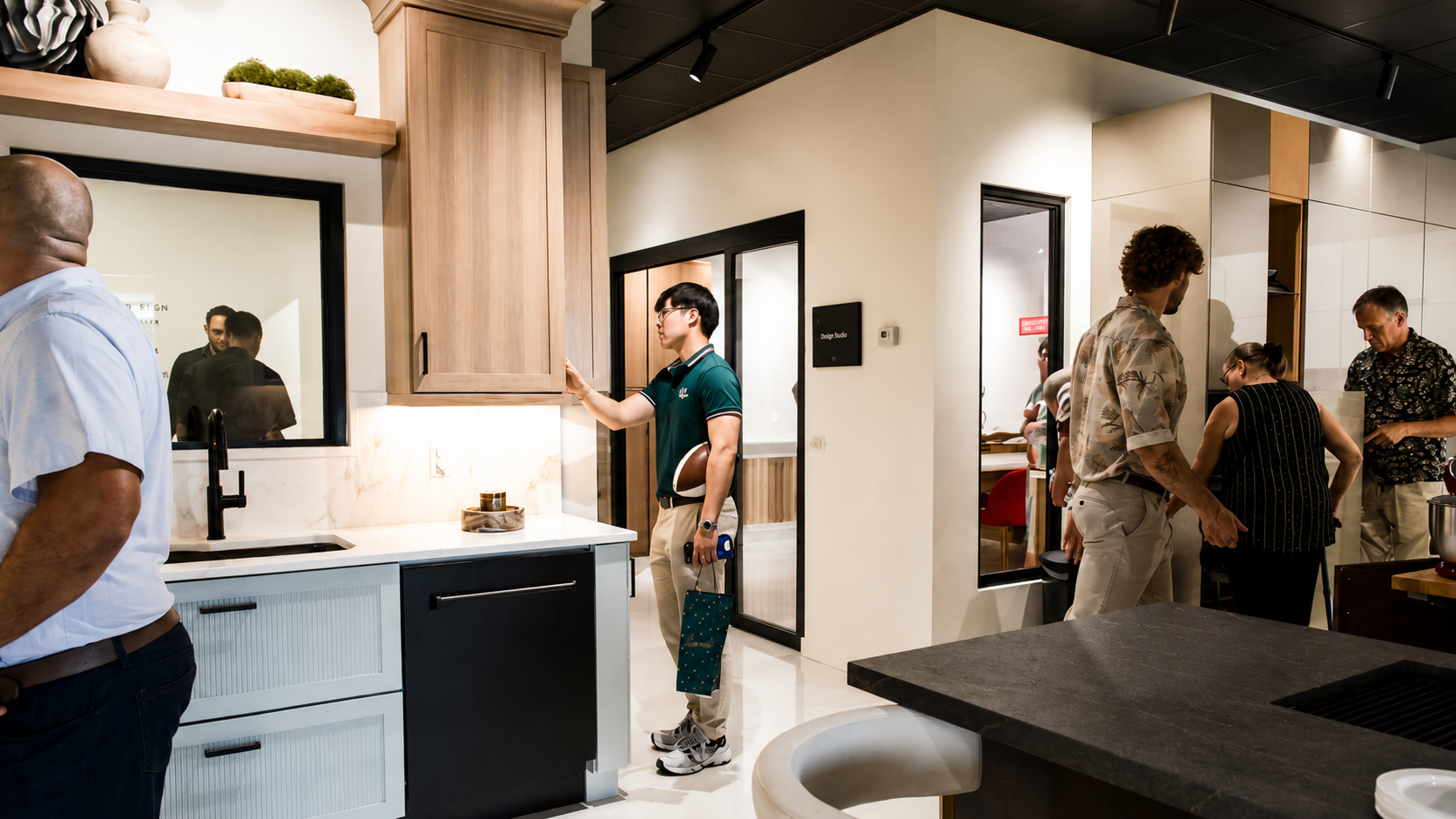
There is another transformation happening quietly inside businesses like Cabinet IQ. The showroom itself is changing. It is no longer merely a place to display products. It is content. It is education. It is experiential retail. It is a place where a customer can understand scale, texture and proportion in ways a Pinterest board cannot communicate.
A cabinet door is different when you touch it. A countertop is different when light moves across it. Storage solutions make more sense when you open them. Design becomes tangible. For a digitally influenced customer who may arrive carrying dozens of saved images, the physical showroom performs an increasingly important role: it turns inspiration into decisions.
Designing for the waypeople actually live.
There is an irony in kitchen design. Some of the industry's most important innovations are almost invisible. A gorgeous stone surface gets photographed. A perfectly placed drawer does not. But ask someone who cooks every night which one changes their life more and the answer becomes complicated.
Functionality is not the opposite of luxury. Functionality may be the highest form of it. The luxury of reaching exactly where something should be. The luxury of enough preparation space. The luxury of storage designed around what you actually own. The luxury of an island that improves circulation instead of obstructing it. The luxury of a kitchen that disappears into your routine because it simply works. That is the design conversation Cabinet IQ is stepping into.
Tampa cutsthe ribbon.
And so we return to that red ribbon. The photographs capture a celebration. But openings are interesting because they represent two moments simultaneously — an ending and a beginning. The construction is finished. The doors open. And then the actual test starts.
Homeowners arrive. Design conversations begin. Measurements are taken. Cabinet doors are opened. Stone is touched. Dream kitchens encounter real budgets. Ideas become drawings. Drawings become orders. Orders become rooms.

For Cabinet IQ Tampa, the grand opening represents another local chapter in a much larger experiment. Can a smarter process create a better kitchen? And can that process be replicated across America without losing the personal experience that made it valuable in the first place? Cabinet IQ is betting that it can.
Better kitchens beginwith better thinking.
The future of kitchen design won't be decided by color trends alone. It will be determined by the companies that understand that design is not simply what something looks like. It is how something works. How it gets built. How customers experience the process. How technology removes friction. How businesses transfer knowledge. And ultimately, how a room supports the life happening inside it.
Tampa may have just gotten another kitchen showroom. But Cabinet IQ is building something more ambitious behind it. A system.
And if that system works, the real product isn't cabinets. It isn't countertops. It isn't even kitchens. It's a better way to get from "I can imagine it." to "I live here."
That is design.
Cabinet IQTampa, Florida
Design / Business / Spaces