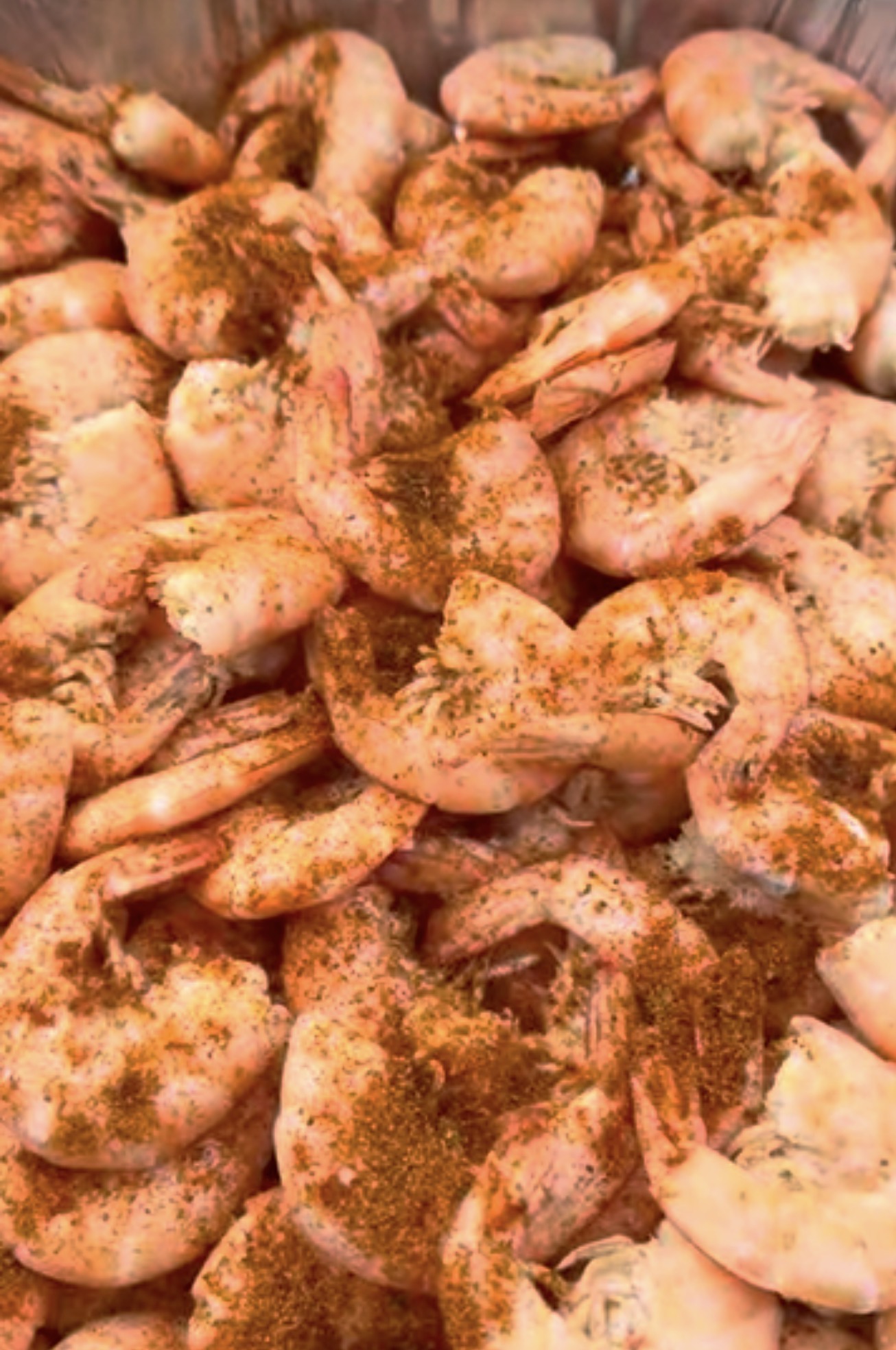
Detroit, Meet Miss Ruth
Miss Ruth is building a Detroit catering brand around soulful food, polished presentation and an ambition to bring elevated Southern hospitality to every corner of Metro Detroit — and eventually across Michigan.
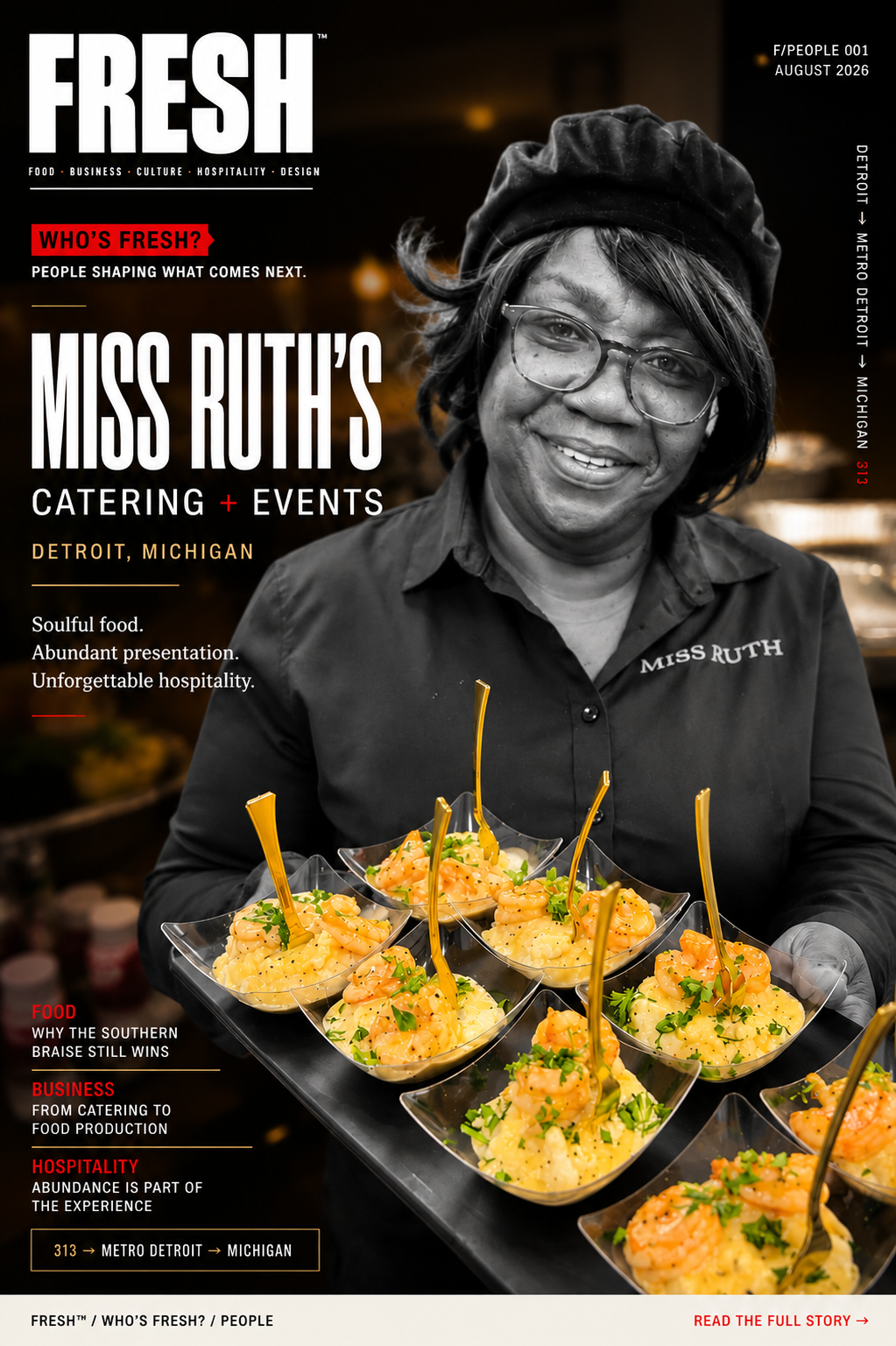
The queen of elevated Southern catering works out of Metro Detroit, and she measures her business in trays. Not covers, not table turns — trays, carried into ballrooms, church halls, corporate lobbies and backyards, each one holding forty individually presented portions that look like they came off a tasting menu and taste like they came out of a family kitchen.
Miss Ruth's Catering has grown the way durable food businesses usually do: by referral, on the strength of a single event that nobody forgot. "Somebody's cousin eats my food at a graduation, and eight months later they're calling about a wedding," she says. "That's my marketing department."
I don't send a plate out that I wouldn't hand to my own mother. That's the whole business.
What separates the operation from the crowded Detroit catering market is not the recipe box. It's presentation as a discipline. Where the category still ships aluminum pans and a sterno flame, Miss Ruth plates in individual vessels — shrimp and grits in a single serve, greens portioned, a braise spooned to the same weight every time. Guests do not queue at a buffet and hope. They are served, and the food arrives looking considered.
"Abundance is part of the experience," she says of the grazing tables that have become the brand's signature — layered elevations of produce, fruit, cheese and charcuterie built on dark linen under warm event light. "But abundance without order is just a pile. People eat with their eyes and then they judge you with their mouth. You have to win both."
The Southern lineage is explicit and unapologetic. The braises are long, the seasoning is confident, the hospitality is generous to the point of insistence. What Miss Ruth has done is translate that tradition into something a corporate event planner can book with a purchase order — consistent portioning, timed service, staff in uniform, a menu that costs out. Southern generosity, run as an operation.
The economics are quietly favorable. Catering carries none of a restaurant's brutal fixed cost: no dining room lease burning through slow Tuesdays, no full-time front-of-house payroll waiting for a rush that may not come. Revenue is contracted in advance, deposits fund the food, and labour scales to the booking. The constraint is production capacity, not demand — and production capacity is a problem you can buy your way out of.
That is where the next chapter sits. The plan runs from events into food production: signature items — the braises, the sauces, the sides that guests ask about before they leave — produced in volume out of a licensed kitchen for retail and wholesale accounts. Events build the brand and the recipe library. Production is what makes the brand an asset rather than a schedule.
"Everybody thinks the goal is more parties," she says. "The goal is the food being in more places than I can physically stand."
Detroit is the starting point, not the ceiling. The stated path is deliberate and geographic — the city first, then the suburbs, then the rest of Michigan — a sequence that lets staffing and logistics catch up to reputation instead of the other way round. It is the same discipline she applies to a tray: get one right, then repeat it exactly.
There is a version of this story that ends as a beloved local caterer with a full calendar and no leverage. Miss Ruth is building for the other version — soul as the recipe, service as the standard, presentation as the differentiator and production as the business. Detroit is just the beginning.